We've all been there.
You're driving through Dubai, maybe shopping for a quick snack or a cup of Karak, and suddenly…
Splash!
A cup tips over, and the tea spreads across your passenger seat. In seconds, your car interior goes from clean to stained. And in the UAE heat, that spill can quickly turn into a stubborn odor if it isn't cleaned properly. Accidents like this can cause long-term damage if the interior isn't cleaned professionally.
Removing stains from car seats shouldn't feel like a heavy task. While most drivers in the Emirates usually depend on trusted and experienced professionals like Ras Autocare to remove car stains easily and affordably, you can actually handle the "first aid" yourself.
Here is exactly how to fix your car's interior without losing your mind.
The Secret to Saving Your Stained Car Seats
Before you run to grab a bucket of water, just stop! Soaking the seat in water is the biggest mistake most people make when trying to remove stains from the car seats. Your car seats are made of polyurethane (PU) foam, a specialized type of sponge. If you pour water onto these seats, it will sink deep into the padding, and this trapped moisture can lead to persistent musty smells, mold, and bacterial growth.
The Golden Rules of Cleaning Spills
Cleaning stains from car seats is not just about scrubbing harder. Following a few important rules can help remove stains effectively while protecting your car's upholstery.
Don't Rub: If you rub a stain, you're just pushing the dirt deeper into the fabric. Always blot (press down firmly) with a dry cloth to soak it up.
Vacuum First: Always suck up the loose sand and crumbs before you add any liquid. If you don't, you'll just be rubbing wet mud into your seats.
Use Microfiber: Old rags can leave lint behind. Invest in a low-cost microfiber towel for effective car detailing.
How to Clean Stains on Car Seats: The Step-by-Step Instructions
To clean car seat stains properly, follow these simple steps every car owner should know.
Step 1 – Vacuum Thoroughly
In the UAE climate, sand hides in every nook and cranny of your car seats. To vacuum thoroughly, you need to remove all the floor mats and give the seats full attention. Use the crevice tool in seams, under headrests, and along edges. Hidden sands worsen stains when moisture is added later. In the UAE's dusty conditions, this step is crucial because it lifts a surprising amount of loose particles before they embed deeper.
Step 2 – Immediately Blot Fresh Spills
If you have spilled anything liquid, like coffee, soda, or juice, blot using a dry microfiber towel. Never rub the area; it will push the stain further into the fibers. If it's greasy (fast-food oil, makeup), dust cornstarch over it, wait 15–30 minutes, then vacuum. The powder soaks up oil nicely.
Step 3 – Mix a Gentle Cleaning Solution
In the spray bottle, mix 1 cup warm water + 1 teaspoon mild dish soap + 1 tablespoon white vinegar. Vinegar helps break down grime and starts tackling odors. Spray a hidden spot first (under the seat or side edge) and wait 10 minutes to inspect for color change or damage.
Step 4 – Apply and Agitate the Stain
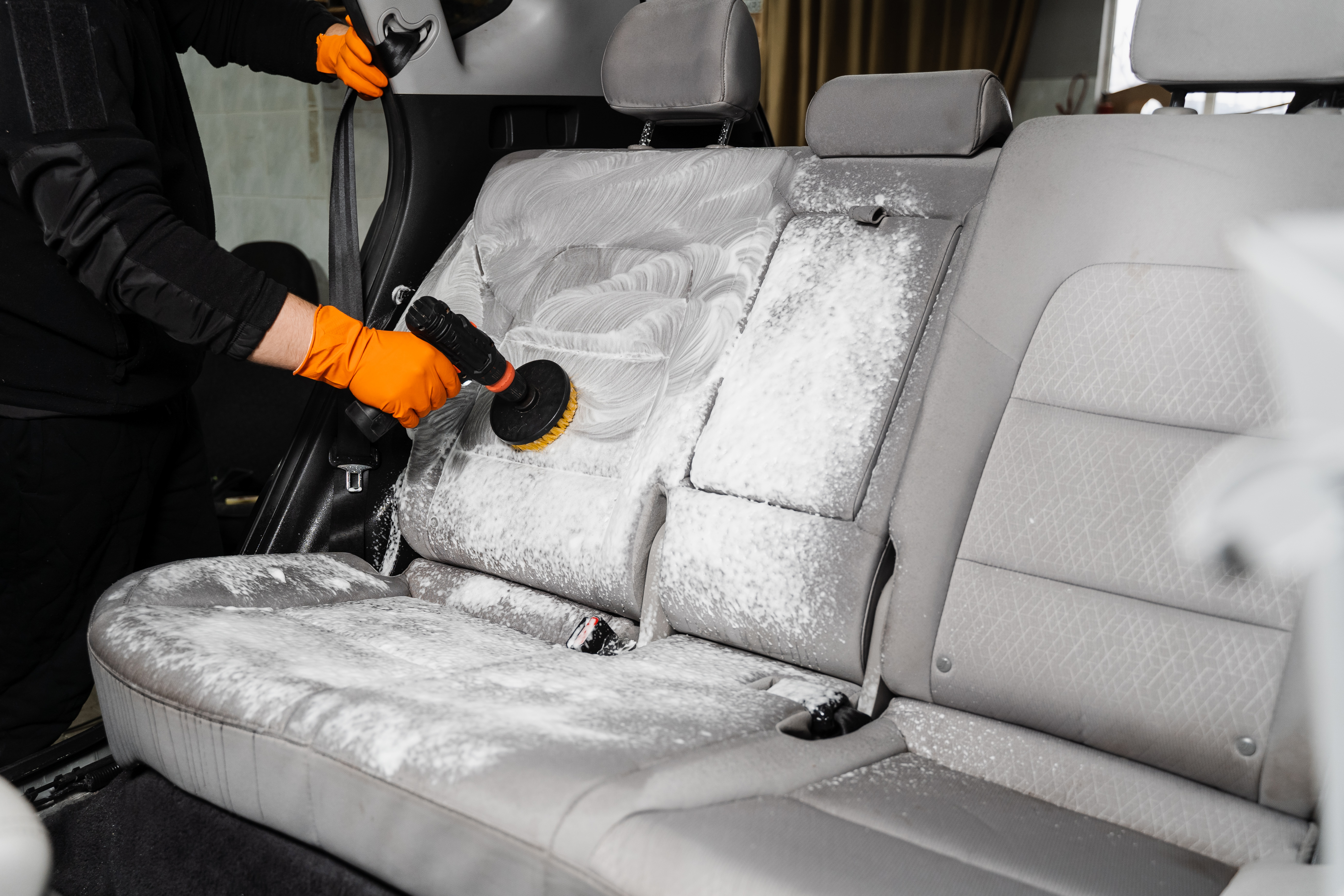
Lightly mist the stained area with the cleaning solution. Be careful not to soak the area, but keep it damp. Then work in small circles with the soft brush, starting from the outside of the stain and moving inward. This prevents spreading. For tougher food or mud marks after beach days, make a paste with baking soda and a little water, apply, let sit for 10–15 minutes, then brush gently.
Step 5 – Blot and Rinse Residue
Use a clean, damp microfiber cloth to wipe away loosened dirt. Afterward, use a dry towel to absorb any remaining wetness. Repeat mist-brush-blot until the cloth stays mostly clean. Since excess water in hot weather can lead to mildew, you have to avoid over-wetting the area.
Step 6 – Deal with Lingering Odors
Sprinkle baking soda generously over the seats (especially where smells are strongest, like pet areas or after smoking). Let it sit for minutes to several hours. If the smell is stubborn, leaving it longer will be the wise choice. Later, you can thoroughly vacuum it all away. For extra help, follow with a very light mist of plain water-vinegar (no soap) and blot dry.
Step 7 – Dry Properly
To completely dry the area, open your car's doors and windows and park the vehicle in the shade. This will allow air to circulate throughout the interior. UAE's dry heat usually dries seats in a few hours, but point a fan at them or run the car's AC on high (doors open) for faster results. Avoid sitting on damp seats; it will bring back odors.
How to Remove Stains from Fabric in a Car
Fabric soaks liquids more quickly than leather, so speed matters more. If you are specifically looking for how to remove stains from fabric in a car, here is the breakdown for the most common messes:
Coffee, Soda, and Juice
These are water-based. Use a mix of warm water and a tiny bit of dish soap. Blot the area until the color stops coming off onto your towel. If the stain is old, you might need to repeat this a few times.
Grease and Oil (French Fries or Makeup)
Soap and water won't work well on oil. You require a grease-degrading agent. Use a tiny bit of vinegar mixed with water or a dedicated grease-remover. Gently scrub in circles from the outside of the stain toward the middle so it doesn't spread out.
Mud and Dirt
Wait for the mud to dry completely! It's much easier to vacuum up dry dirt than it is to wipe away wet mud. Once it's dry, brush it off and vacuum the rest.
Tips to Keep Car Seats Cleaner Longer
- Vacuum your seats weekly to stop sand buildup.
- Throw a towel or a cheap seat cover over the seats during family outings or picnics.
- Park in shade when possible; direct sun sets stains faster and fades colors.
- Try to tackle spills the same day.
- For leather seats, skip heavy water; use a barely damp cloth with mild soap only, then dry immediately to avoid cracks.
- After cleaning, sprinkling a light amount of baking soda every month or two keeps odors at bay between deep cleans.
Why Pro Cleaning Is Worth It
Doing it yourself works great for small spills, but your car needs a reset every few months due to the sand acting like tiny blades that wear down your fabric and ruin that fresh interior feel. Though a quick home clean handles the surface, only a professional deep-extraction can pull those hidden particles out of the fibers to truly protect your investment and keep your cabin feeling crisp and new.
Professional detailers like Ras Autocare use high-powered "extractors." These machines shoot hot water into the seat and suck it back out instantly, pulling out years of dust, sweat, and grime that a normal vacuum just can't touch. It's the only way to get that "brand new car" feeling back and ensure the air you breathe inside your car is actually clean.
Our service delivers a factory-level refresh to your car. It's the fastest and most reliable way to get that "brand new car" feeling back while ensuring the air you breathe inside your cabin is actually clean and healthy.
The Takeaway
Don't panic the next time you spill a drink on your car seats. Just remember: blot, don't rub, and keep the water to a minimum. Keeping your car clean makes driving much more relaxing, prevents permanent odors, and keeps the resale value of your car high.
If the mess is too big, or you just want your car to look perfect for the weekend, let the experts at Ras Autocare handle it. They have the right tools to make those tough stains disappear without damaging your interior, giving you a showroom-quality finish every time.

Ras Autocare offers the best car seat cleaning and interior detailing services in Dubai.